
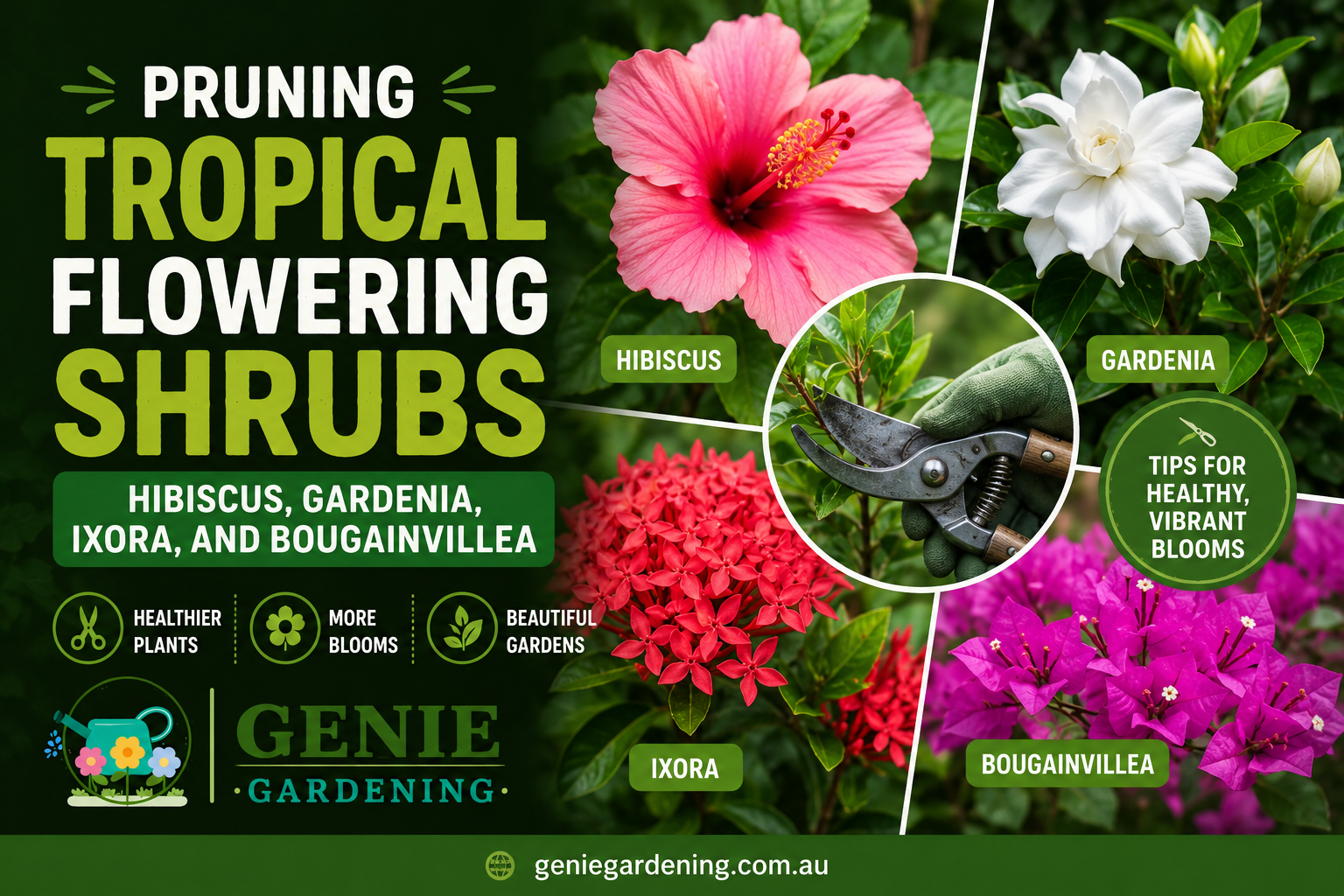
Picture yourself walking into a garden and the color of the flowers like shiny red hibiscus, fragrant white gardenias, fiery ixora and stunning purple bougainvillea, are scaling your walls. Tropical flowering shrubs are the heart of warm weather landscapes that change the simple outdoor space into a lively paradise. However, if you only enjoy the view and avoid their care it can make them dull. Their beauty will become old, light and shy to bloom without proper care. If you truly want to have a blooming garden then water and sunlight is not all they need; they also need proper pruning. Many gardeners feel nervous while cutting their plants having a fear that they might hurt them. This is not an act of hurting them, it is the act of caring for them.
Tropical plants which produce flowers like hibiscus, gardenia, ixora and bougainvillea are easily available in Australian gardens. If your residence is in warmer areas like Queensland, New South Wales or Western Australia, you can also enjoy the view of these flowers by adding them to your garden. These plants can grow beautifully with very little action. But many people face one frustrating issue when pruning tropical shrubs Cairns. The plant grows bigger and bigger, but the flowers slowly become fewer. Sometimes the plant looks messy, uneven or weak. If this sounds familiar, the reason is usually very simple that you are not pruning the plant properly. The good news is that pruning is not difficult. You don’t need to be a professional. You just need to understand a few basic things and follow them regularly. In this guide, we will explain everything in a very simple way so you can easily understand and even explain it to someone else if they need it.
Why Should I Prune My Plants Instead of Just Letting Them Grow?
Feel the pruning like giving your plant a fresh start. When a plant keeps growing without cutting, it becomes crowded. Old branches keep using energy and new growth slows down. The plant consumes more energy keeping itself rather than producing flowers. When you prune, you remove old, weak or unnecessary parts. This allows the plant to focus on new growth. And here’s the important part, most tropical plants produce flowers on new branches. So when new branches grow, more flowers come. Pruning also helps sunlight reach all parts of plants. Air can move freely which lowers the risk of diseases. And of course, the plant looks cleaner, healthier and more attractive.
When Is The Best Time To Prune Plants In Australia?
Time is very important if you prune at the wrong time, you can lose flowers. In Australia the best time for pruning most plants is late winter to early spring which is around August to September. This is when plants are ready to rise again after the chillier months. You can also do light pruning after the plant ends flowering. This helps you to prepare it for the next blooming cycle. Do not prune during intense heat in summer especially during heatwaves. Also, in cold areas do not prune during ice as it can harm fresh cuts. A simple rule to recall is to prune after flowering or just before new growth starts.
How do I Prune Hibiscus to Get More Flowers?
Hibiscus is one of the easiest plants to prune and it gives very fast results. This hibiscus pruning guide will help you out in each step. Start by looking at your plant carefully. Remove any branches that are dry, weak or dead. These are not useful and only take energy from the plant. Next the longer branches and cut them shorter. You don’t need to cut too much, around one third is enough. Always cut just above a leaf or node. This is where new branches will grow. If your plant looks too thick from the inside, remove a few inner branches. This helps sunlight and air reach all the parts of the plants. In Australia, pruning hibiscus in late winter works best. As a few weeks pass you will start to see new leaves and soon after that flower buds. If you do this regularly your hibiscus will become bushy and full of flowers.
How Do I Prune Gardenia Without Removing Future Flowers?
Gardenia is a beautiful plant but it needs careful handling. The most essential thing to recall is timing. Gardenia pruning time is right after it finishes flowering. If you wait for a long time the plant starts forming new buds and you might cut them by mistake. You don’t need heavy pruning here. Just remove the old flowers and any dry branches that got damaged. Then lightly shape the plant so it looks neat. Avoid cutting too deep or too much. Gardenia care tropical climate prefers gentle pruning. In humid parts of Australia, this also helps reduce fungal problems because better airflow keeps the plant healthy.
How Do I Prune Ixora To Make It Look Full And Healthy?
Ixora is a hedge or border plant that you can see in almost every garden in Autrelia. It looks best when it is thick and evenly shaped. The good thing is, ixora does not need heavy pruning. Light trimming is enough. Start by removing old flower clusters. This enables new flowers to grow, then trim the top and the sides to keep the plant in shape. If you see long branches that look out of place, cut them slightly again. This helps the plant grow more branches and become dense. You can do light pruning throughout the year in warm Australian climates. Do remember that heavy cutting in cold weather is not worth it. With regular trimming, ixora stays compact and keeps flowering nicely.
How do I Prune Bougainvillea to Get More Blooms?
Bougainvillea maintenance is not as hard as other plants. It is very strong and actually grows better when it has good pruning. Unlike other plants, you can cut it more without worrying too much. Remove long vines and old, thick branches. Then shape it the way you like on a wall, fence or a brush. The key thing to have in mind is that bougainvillea flowers on new growth. So when you cut it, it produces new branches and those branches give flowers. You can prune it after each flowering cycle. Also avoid giving too much water. Slight dryness or stress actually helps in producing more blooms. With good pruning and sunlight bougainvillea can give flowers many times in a year.
What Are The Most Common Mistakes People Make While Pruning?
Many people are afraid to prune and because of that they do not do it or do it wrongly. One familiar mistake is cutting at the wrong time. If you prune when the plant is about to flower you will lose all the blooms that have just come up. Another mistake is cutting too much at once. Some plants can handle it but others cannot. Using dirty or blunt tools is also a problem. It can damage the plant and spread disease. Some people also cut willy without looking at the shape of the plant. This can make the plant look awry. The best approach is to go slow, observe the plant and make clean and careful cuts.
What tools do I need for simple pruning at home?
You do not need tools for pruning that cost so much. A simple sharp cutter or pruning scissors is fine for most plants. For thicker branches you can use a small saw. Always make sure your tools are clean and you use them correctly as it can make or break your plant’s look. This helps stop infections and also keeps your plants healthy and in good condition all the time. Gloves are also helpful particularly when working with plants like bougainvillea that have thorns. Good tools make the job easier and give better outcomes.
What should I do after pruning my plants?
After pruning, your plant needs a little extra care for healing. Give some water but do not overwater. Add compost or a light waste so the plant gets a supplement for new growth. Make sure the plant gets enough sunlight, as it contributes to the plant’s good health. In Australia, sunlight is quite strong which helps plants grow faster. Within two to four weeks, you will start seeing new shoots. This is a hint that your plant is healthy and reacting well.
How Does a Simple Pruning Schedule Work in Australia
You don’t need to follow a complicated plan. You just need a simple yearly pattern. In late winter, do major pruning for most plants. This prepares them for strong growth. During spring and early summer focus on helping new growth with watering and feeding. In peak summer do not do heavy pruning and only do light trimming if necessary. After the following cycle do light pruning again to prepare for the next bloom. In winter do not perform any heavy cutting and let the plant rest for a few months. This simple cycle works for most Australian gardens.
Does Pruning Really Increase Flowering In All These Plants?
Yes, it does for most of the plant. all produce flowers on new growth. When you prune you give them a chance to get new branches which means more flowers. Gardenia also benefits from pruning but timing is very important. If you do it correctly pruning can completely change how your plants look and perform.
Conclusion
Pruning may seem hard in the beginning, but once you try it, you will see how simple and helpful it is. You don’t need to be excellent for this work. Just watch for some basic things like cutting at the suitable time, not overdoing it and taking care of the plant after pruning. All these things have a value if you want your plants to produce healthy and beautiful flowers.
When you have a good routine your hibiscus, gardenia, ixora and bougainvillea will become healthier, fuller and full of flowers. And once you see those fresh blooms you will feel confident and enjoy taking care of your garden even more.
If it looks like a difficult task to you, you can leave it to us. Genie Gardening provides professional shrub trimming and garden maintenance services to give the best care to your plants and keep your garden looking beautiful all year round.
FAQ’s
Q. Can I prune tropical flowering shrubs all year round in Australia?
Yes, it allows for light pruning all year round if you live in warm areas. But if you want to do a heavy pruning, late winter or early spring will be a great time for it. keep in mind that doing pruning during extreme heat or frost can be harmful for plants, as it can stress the plant and decrease flowering.
Q. How much should I cut when pruning hibiscus or bougainvillea?
For hibiscus, cutting back about one-third of the plant is enough. You can apply heavy pruning to bougainvillea, as it can handle aggressive pruning once it is done with flowering. Keep in mind that until it overgrown does not cut too much, it will affect it oppositely.
Q. Why is my plant not flowering after pruning?
This can happen because of wrong timing or over-pruning. If you prune it during bud formation, you may lose future flowers. There can be other reasons like a lack of sunlight, poor soil nutrition or overwatering. These reasons can also affect flowering.
Q. Do I need to fertilise plants after pruning?
Yes, fertilising after pruning can offer a plant faster healing and new growth. Use a good fertilizer or organic compost to support healthy shoots and better flowering.
Q. How long does it take for plants to recover after pruning?
Most tropical plants start showing new growth within two to four weeks after pruning. Flowering usually begins within four to eight weeks. It depends on the plant type, weather conditions, and the care you are providing them.